WALDWICK HOMEOWNER GUIDE

A little preparation.
A better HVAC conversation.

You do not need a technical diagnosis to ask for help. These simple observations and planning questions make the next conversation more useful.

Know your options. Choose your next step.

Illustration of a suburban home exterior

Start with safety.

If you smell gas or a carbon monoxide alarm sounds, leave the building and contact emergency services or the gas utility from a safe place. Do not use a website form for immediate danger.

Do not bypass safety controls, open hot or pressurized components, handle refrigerant, or work on fuel and electrical connections. A stopped system that repeatedly shuts down needs professional assessment.

SAFE OBSERVATIONS

What you can note without taking equipment apart.

  • Check which thermostat mode is selected and note the set temperature.
  • List the rooms that feel different and whether doors are usually open or closed.
  • Record when a sound, leak, or comfort change appears.
  • Follow the manufacturer’s directions for accessible filter care.
  • Keep model information and previous service notes in one place.

These observations help describe a problem. They do not prove its cause or replace an assessment.

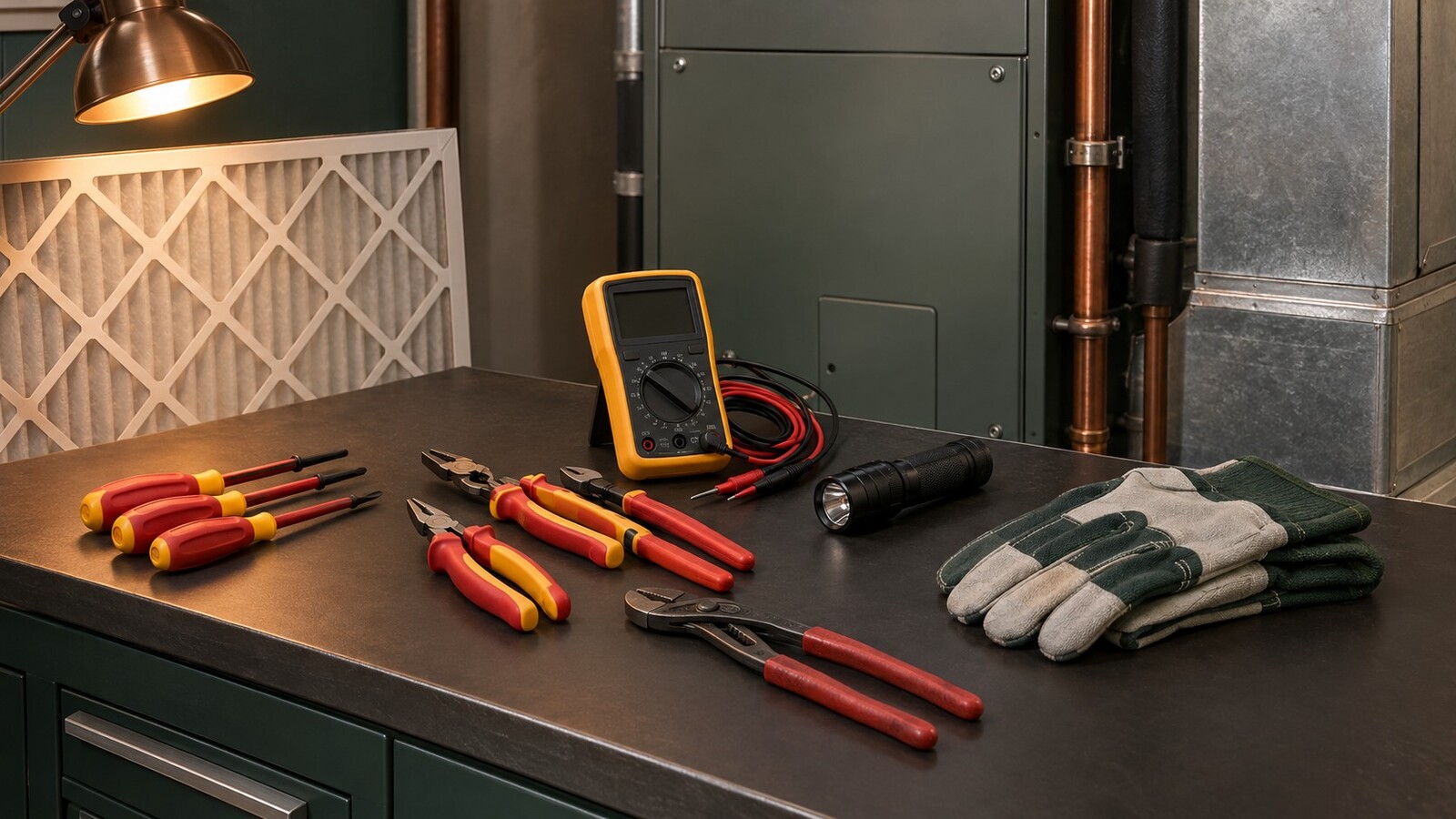
Illustration of HVAC maintenance tools

Plan around the season and your equipment.

Discuss heating care before heavy heating use and cooling care before heavy cooling use. The right interval and checklist depend on the equipment and manufacturer’s guidance.

A boiler, furnace, central AC, and ductless unit need different attention. Ask exactly which equipment the visit covers and which repairs would be separate.

Explore maintenance and tune-ups.

BEFORE A BIG DECISION

Repair or replace? Compare these questions.

  • What is the identified fault, and what would the repair change?
  • Does the proposed system fit the rooms and distribution?
  • What stays, what is removed, and what needs separate work?
  • How will operation and airflow be checked?
  • What maintenance and warranty terms are included?
  • Which permit or utility requirements apply to the actual project?

Read more about replacement and conversions. Do not choose from age or a headline efficiency number alone.

USEFUL RESOURCES

Read from independent authorities.

The U.S. Department of Energy home heating and cooling guide explains maintenance and system planning.

The EPA indoor air quality guidance covers source control, ventilation, and filtration. It helps explain why one product is not a complete answer to every air-quality concern.

The EPA carbon monoxide guide explains sources and safety concerns.

These resources are independent information, not endorsements or business partnerships. Verify current project requirements before relying on a general guide.

Start with what changed.

Tell us which rooms are affected, what the equipment is doing, and when the problem began. You can ask a useful question without knowing the name of the broken part.

For your Waldwick property, call (201) 379-9510 or email Info@WaldwickHVAC.com to discuss the next step. Availability, work scope, and pricing are confirmed directly.